

Virginia generator regulations changed on November 4, 2026. Any data center air permit application submitted to the Virginia Department of Environmental Quality (DEQ) on or after July 1, 2026 now has to show each backup engine-generator will emit no more than a Tier 4-equivalent gen-set.
That’s House Bill 507 (HB 507), codified at Va. Code § 10.1-1322.6. You are impacted if your permit is in the queue, or you’re planning to file in 2027.
AERINOX writes its emissions guarantee to the stack concentration in your permit, at the limit the permit sets. That will be the number DEQ reviews and the number the stack tester confirms.
What do Virginia generator regulations require under HB 507?
The statute prohibits DEQ from issuing an air permit for a data center application unless the emission limit for each engine-generator is equal to or less than the emissions achieved by a Tier 4-equivalent gen-set. The State Air Pollution Control Board’s implementing regulations were published October 5, 2026 and took effect November 4, 2026.
3 points before you file:
- It’s performance-based. A gen-set doesn’t need a Tier 4 Final certification from the original equipment manufacturer (OEM). It needs to achieve emissions at or below a Tier 4-equivalent unit in the categories the statute names.
- The trigger is the application date. Any application submitted on or after July 1, 2026 is in. Applications submitted earlier are governed by the prior guidance.
- The permit limit is the obligation. DEQ sets a numeric limit for each gen-set. Hitting Tier 4-equivalent performance at the stack, in testing and ongoing operation, is the compliance point.
What is a “Tier 4 equivalent” gen-set in Virginia?
Va. Code § 10.1-1322.6 defines the Tier 4-equivalent gen-set by the control technologies it carries, or by equivalent technologies that achieve the same emissions performance.
The 3 categories:
- Selective catalytic reduction (SCR) or equivalent for nitrogen oxides (NOx)
- Diesel oxidation catalyst (DOC) or equivalent for carbon monoxide (CO) and hydrocarbons
- Diesel particulate filter (DPF) or equivalent for particulate matter (PM)
The rule stays open to retrofits. A Tier 2 engine with SCR, DOC and DPF after treatment can meet Tier 4-equivalent performance at the stack.
The engine’s data plate still says Tier 2. The permit-relevant numbers come out of the stack test.
Virginia is the biggest data center market to adopt a Tier 4-equivalent rule, and the first in which it’s binding on new applications right now. Oregon DEQ’s Tier 4 Streamlined Data Center Permit uses the same SCR + DOC + DPF definition. Illinois Senate Bill (SB) 25, effective June 1, 2026, takes the same path for permit applications filed on or after December 1, 2026.
Who the rule applies to, and when
HB 507 is specific to data centers. The trigger is the application date on each permit. The table below lays out the sequence for a project team.
| Event | Date | What it means for your permit |
|---|---|---|
| HB 507 enacted | Chapter 397, 2026 Acts of Assembly | Statutory requirement set in law |
| Application-date cutoff | July 1, 2026 | Any application filed on or after this date has to meet Tier 4-equivalent limits |
| Implementing regulations published | October 5, 2026 | Virginia Register |
| Implementing regulations effective | November 4, 2026 | DEQ’s review of Tier 4-equivalent applications now operates under the published rule |
| Executive Order 22 signed | September 18, 2026 | Governor directs DEQ to promote Tier 2-to-Tier 4 retrofits of existing generators |
A project that filed its permit application in May 2026 is still under the prior framework. A project that filed in August 2026 is in. A project planning to file in 2027 is in, and should assume the DEQ reviewer and the Office of the Chief Energy Officer will read the application closely.
The Data Center Accountability Framework shifted the political oversight. The Tier 4-equivalent limit is the technical floor.
Why the governor is pushing Tier 2 retrofits
Executive Order 22 (EO 22), signed September 18, 2026, directs DEQ to review cumulative impacts from diesel backup generation at data centers and to promote retrofits of existing Tier 2 generators to Tier 4 or equivalent emissions controls.
This is separate from HB 507. HB 507 is a statute, binding, and scoped to new applications. EO 22 is executive direction, aimed at the installed base.
The installed base in Virginia is roughly 75% Tier 2, according to the Better Data Center Project. Most operators can’t replace that fleet on a near-term schedule. A retrofit with SCR, DOC and DPF is the practical path, and EO 22 asks DEQ to make it easier.
A retrofit path matters for permit math too. A Tier 4-equivalent retrofit can let an operator claim lower per-engine emissions, which changes the Title V and synthetic minor arithmetic for the campus. The commercial value often shows up as more engines or more allowable runtime inside the same permit, independent of the engine’s plate tier.
How AERINOX’s emissions guarantee fits a Virginia permit
The DEQ reviewer and the engineering, procurement and construction (EPC) compliance manager both want the aftertreatment vendor to write the permit number into the guarantee.
The concentration at the stack, at the limit the permit sets.
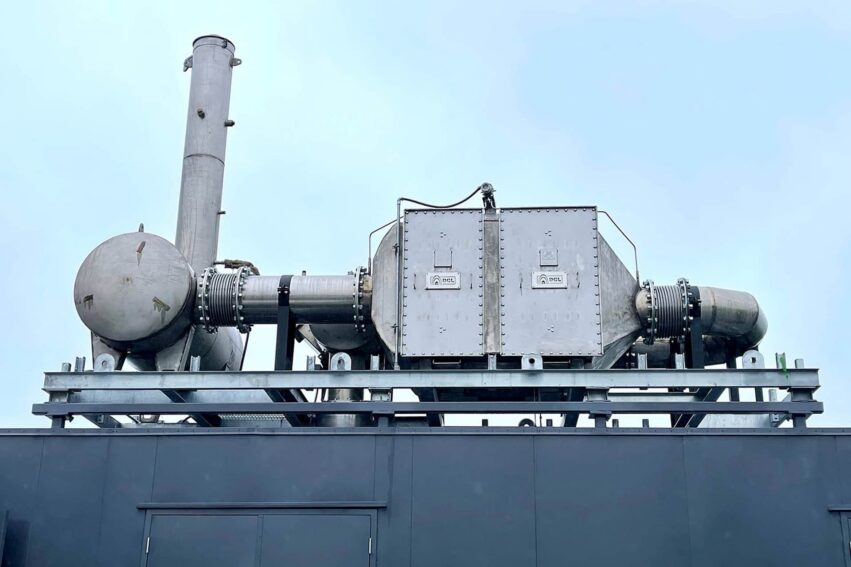
The AERINOX Emissions Guarantee is written against that number. The guarantee ties commissioned performance to the stack emission concentrations the permit requires, over a defined guarantee period. For a Virginia Tier 4-equivalent permit, the SCR, DOC and DPF package is engineered, built and warranted to the permit limit DEQ wrote.
3 operational points that come up in Virginia project reviews:
- Commissioning time. AERINOX factory-tests the SCR skid before it ships. On-site commissioning has been completed in under 4 hours in the field. On a data center build schedule, hours versus days changes the critical path.
- Remote commissioning. AERINOX supports remote commissioning where site access is constrained or late in the build. That keeps the stack-test window from slipping.
- Durability at the stack number. The AERINOX team has a large installed base of SCR systems.
What to put in your Virginia permit application and bid spec
For a new build:
- State the Tier 4-equivalent basis at the stack, in the units DEQ will use. ppmvd at 15% O2, g/bhp-hr, and tons per year, each with its reference. Don’t rely on the engine data plate alone.
- Name the control technologies. SCR for NOx, DOC for CO and hydrocarbons, DPF for PM. Specify catalyst, urea injection, controls and continuous emissions monitoring system (CEMS) scope where relevant.
- Require the vendor’s emissions guarantee to be written to the permit limit DEQ will enforce. The permit holds the site to a stack concentration, and so should the guarantee.
- Plan the stack test. First-pass compliance is cheaper than a second visit. Factory testing of the skid before shipment reduces the risk the first stack test is also the first time the system has run at load.
For a retrofit under EO 22:
- Baseline the existing Tier 2 engine. Fuel, load profile, operating hours, current emissions data.
- Model the Tier 4-equivalent delta. NOx, CO and PM reductions, at the permit basis.
- Confirm the permit path with DEQ. Retrofit permit modifications, startup testing requirements and CEMS or portable testing expectations.
- Lock the emissions guarantee against the retrofit’s intended permit limit.
FAQ
Does a Tier 4 Final-certified engine automatically satisfy HB 507?
Not automatically. The statute is written against performance at the stack, and the permit sets the limit DEQ will enforce. A Tier 4 Final engine is a strong starting point; the obligation is the permit number, and the stack test has to confirm it.
Can a Tier 2 engine with SCR, DOC and DPF meet Tier 4-equivalent?
Yes, when the aftertreatment package is sized to the engine’s uncontrolled emissions and the permit’s required stack concentration. That’s the premise of EO 22’s retrofit direction, and it’s the premise behind Oregon DEQ’s streamlined Tier 4 permit pathway. The Virginia reviewer will want the data on the engine, the controls and the expected stack performance.
What’s the timing risk if we file after January 2027?
The 2027 General Assembly session may take up broader data center legislation, and DEQ’s cumulative-impact review is on a schedule under EO 22. The Tier 4-equivalent requirement itself is set in statute. Projects filing in 2027 should expect review attention to stay high, and should lock a control package that reads cleanly against the permit limits before filing.
How does Virginia compare to Illinois and Oregon?
Illinois SB 25 (PA 104-0458) requires data center air construction permit applications filed on or after December 1, 2026 to specify diesel backup gensets meeting standards at least as protective as EPA Tier 4 (40 CFR Part 1039) and natural gas backup gensets meeting standards at least as protective as Tier 2 for nonroad large spark ignition engines. Oregon DEQ offers a fast-track permit pathway for Tier 4 or Tier 4-equivalent (SCR + DOC + DPF) systems, and the Governor paused new data center permits on October 20, 2026. Vendor documentation that speaks to all 3 regimes reduces re-work when the same campus owner files in a second state.
Who at DEQ reviews a Tier 4-equivalent application?
DEQ’s Air Division handles the permit; the Office of the Chief Energy Officer now holds centralized policy oversight under EO 22. Review with your external or internal air permit consultant prior to filing.
What to do next
If you’re working on a Virginia data center permit due in 2027, send us the engine data sheets and the draft permit limits. We’ll write a budgetary SCR, DOC and DPF package against your stack concentration, with the emissions guarantee tied to that number. Call sales at 970-236-8953 or email sales@aerinox-inc.com.
Sources
- Va. Code § 10.1-1322.6 (HB 507, Chapter 397, 2026 Acts of Assembly). Virginia law, accessed November 2026.
- Virginia State Air Pollution Control Board implementing regulations, published October 5, 2026, effective November 4, 2026. Virginia Register.
- Executive Order 22, Governor Abigail Spanberger, September 18, 2026. Virginia Data Center Accountability Framework.
- Illinois SB 25 (Public Act 103-0781), signed January 8, 2026; effective June 1, 2026.
- Oregon DEQ Tier 4 Streamlined Data Center Permit, accessed November 2026.
- Williams Mullen legal alert: “Virginia Tightens Air Permitting for Data Center Backup Generators,” November 2, 2026.
- Trinity Consultants resource: “Oregon DEQ Tier 4 Fast-Track Air Permit Pathway for Data Centers,” October 2025.